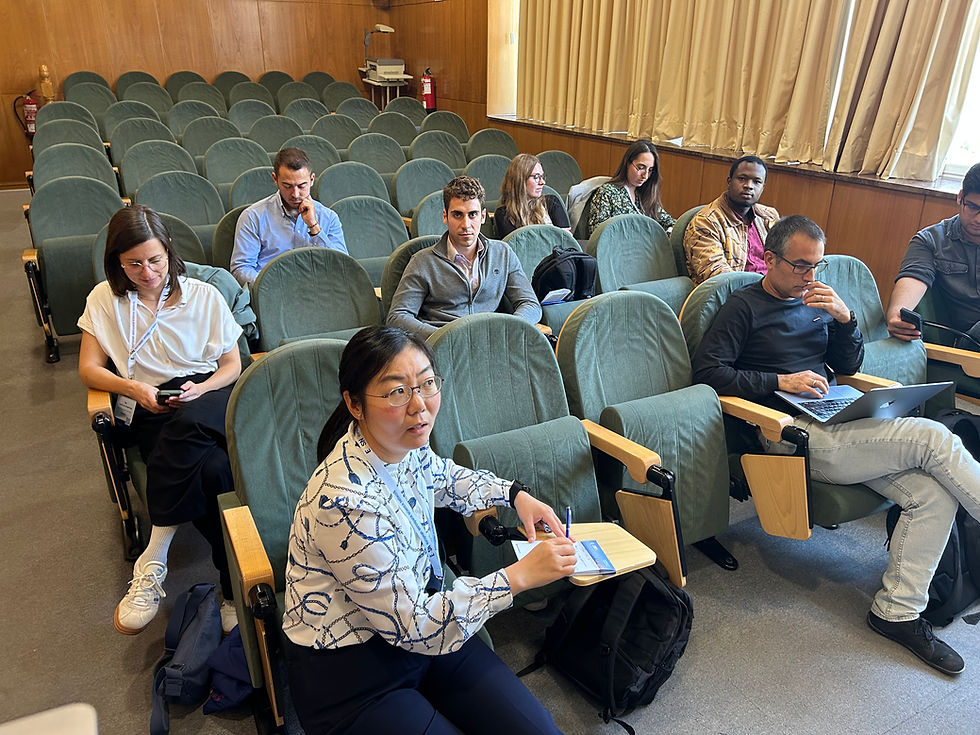
F4ECLIM presented latest research at the EASN International Conference in Madrid
- Jun 12
- 2 min read
On 6 June 2026, the F4ECLIM project took part in the EASN International Conference in Madrid, contributing to discussions on innovative solutions for more sustainable aviation. The project team presented its latest research during the dedicated BeCoM project session, highlighting recent advances in assessing the climate benefits of climate-optimised aircraft trajectories.
The presentation, entitled From uncertainty to confidence intervals for mitigation potentials of climate-optimized aircraft trajectories, showcased F4ECLIM's work on improving the robustness of climate optimisation by systematically addressing the uncertainties that influence trajectory performance.
Climate-optimised trajectories aim to reduce aviation's overall climate impact by avoiding atmospheric regions where emissions produce particularly strong warming effects, such as areas favourable to persistent contrail formation or enhanced NOx-induced ozone production. The research presented demonstrated a comprehensive workflow that combines algorithmic Climate Change Functions (aCCFs) with advanced aircraft trajectory optimisation to estimate the climate effects of both CO₂ and non-CO₂ emissions.
A key aspect of the work is the systematic assessment of uncertainty sources, including meteorological conditions, model parameterisations, climate metrics and background atmospheric conditions. By integrating these uncertainties into the optimisation process, the project can provide confidence intervals for the estimated mitigation potential of alternative trajectories, together with the associated operational cost implications. This represents an important step towards supporting informed operational decision-making and increasing confidence in the implementation of climate-optimised flight planning.
The presentation formed part of the BeCoM project session, bringing together European research initiatives working on innovative approaches to reducing aviation's climate impact through operational measures.
Earlier that day, the F4ECLIM consortium also held a project workshop, providing partners with an opportunity to review technical progress, discuss ongoing activities and coordinate the next stages of the project.

The work presented at the EASN International Conference reflects the project's contribution to advancing science-based operational solutions for reducing aviation's climate impact and provides a strong foundation for the final project outcomes and recommendations.


Comments